




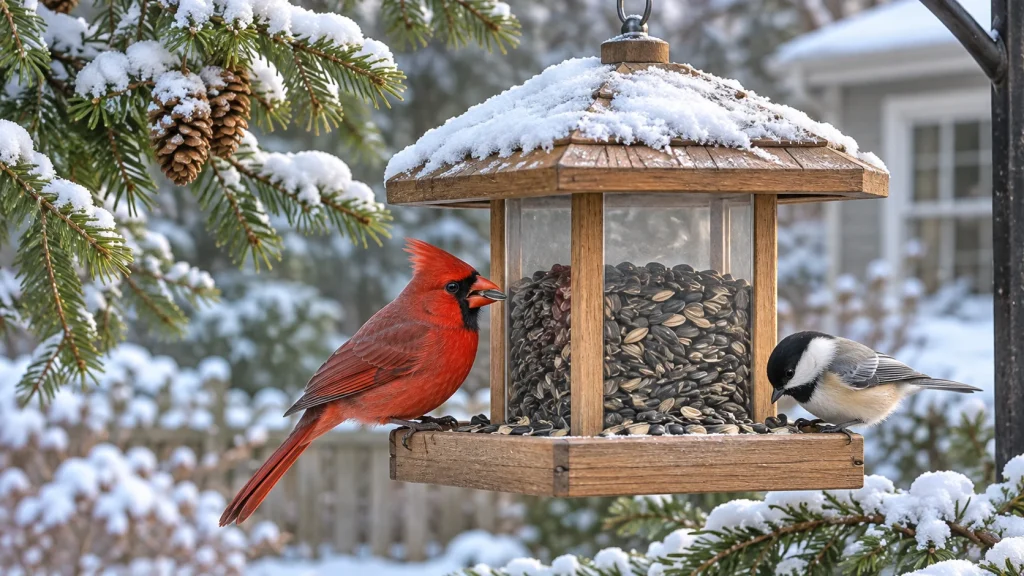
Not all bird food is created equal. High-fat foods provide much-needed energy during freezing weather. Black-oil sunflower seeds are an excellent all-around choice because their thin shells are easy to crack and their high oil content provides calories. Suet cakes are particularly beneficial for woodpeckers, chickadees, and nuthatches. Nyjer seeds attract finches, while peanuts and unsalted nuts provide additional energy.
Fresh or dried fruit, such as apple slices and raisins, can also attract robins, waxwings, and other fruit-eating birds. Avoid bread, salty foods, and anything spoiled or moldy.
Feeding Birds in Different Climates
In colder northern climates, provide sheltered feeders, high-energy suet, and sunflower seeds. Keep feeders stocked during snowstorms and place them near natural shelter, such as evergreen trees, while keeping them away from places where predators can hide.
In milder southern climates, birds may have more natural food available, but supplemental seed, fruit, and clean water are still helpful. In dry southwestern regions, water can be especially important. Use shallow birdbaths and refill them regularly.
In rainy coastal areas, choose covered feeders and keep seed dry to prevent mold. Clean feeders regularly, regardless of climate, to reduce the spread of disease.
Don't Forget the Water!
Birds need fresh water even when temperatures are freezing. Heated birdbaths or regularly refreshed shallow dishes can provide essential drinking and bathing opportunities.
A Little Kindness Goes a Long Way
Feeding birds is a simple way to support local wildlife while enjoying their colorful visits. Keep food and water available throughout winter, maintain clean feeders, and provide natural shelter. Your feathered neighbors will appreciate the hospitality until spring brings their natural food supplies back!