





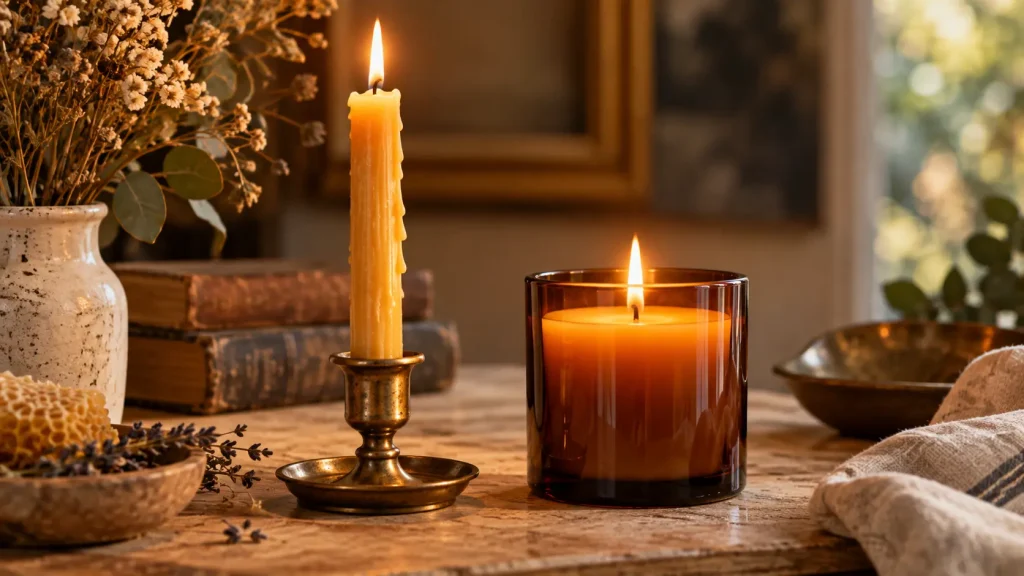
An Ancient Source of Light
Long before electric lights, people depended on fire to see after sunset. Candles have been around for thousands of years, although nobody knows exactly when the first true candle was invented. Ancient Egyptians used rushlights or torches made by soaking reeds in animal fat, while the Romans are generally credited with developing an early recognizable candle by dipping papyrus or rolled fibers repeatedly into melted animal fat called tallow.
By the Middle Ages, candle-making had become an established craft in Europe. Most ordinary candles were made from tallow, a relatively inexpensive fat obtained from animals. Unfortunately, they were smoky, smelly and prone to becoming soft in warm weather. Wealthier households and churches could afford candles made from beeswax, which burned more cleanly and produced a pleasant, naturally sweet scent.
Wax Changes Everything
A major improvement came in the 18th century with the introduction of spermaceti, a waxy substance obtained from the head of sperm whales. It produced harder, brighter-burning candles and became popular for a time. Later came paraffin wax, developed during the 19th century from petroleum and coal byproducts. Paraffin was inexpensive, reliable and easy to manufacture, helping transform candle-making from a handcraft into an industrial business.
The invention of inexpensive matches and, eventually, gas and electric lighting dramatically reduced the candle’s importance as a source of illumination. But instead of disappearing, candles found an entirely new purpose.
When Candles Became Fragrant
People had been combining pleasant-smelling materials with candles for centuries, particularly through the use of scented beeswax and herbs. However, the modern scented candle industry really took off with advances in wax production and fragrance manufacturing during the 19th and 20th centuries. Synthetic fragrances made it possible to create consistent scents in large quantities, allowing manufacturers to produce candles designed specifically for their aroma rather than simply their ability to provide light.
Every Candle Has Its Place
Today’s candle varieties include tapers, pillars, votives, tea lights, container candles, jar candles, floating candles, birthday candles, hurricane candles, flameless candles, novelty candles, gel candles, beeswax candles, soy candles, scented candles, citronella candles, LED candles, dinner candles, cartridge candles and travel candles. Some are designed for decoration, some for special occasions, and others simply for creating a particular atmosphere.
From Household Necessity to Hot Commodity
Today, candles are rarely purchased because someone needs to illuminate a dark room. Instead, they’re associated with relaxation, decorating, celebrations, romance and self-care. A candle can make a bathroom feel like a spa, turn a dinner table into an elegant setting or fill an entire house with the smell of pumpkin spice.
The candle business has become a booming global industry, with thousands of brands selling everything from inexpensive grocery-store candles to luxury products costing hundreds of dollars. Specialty fragrances, decorative containers, seasonal collections and personalized candles have transformed what was once a basic household necessity into a major lifestyle and gift category.
The humble candle has survived thousands of years of technological change because its appeal was never really just about light. Today, we light candles because they make our surroundings feel warmer, calmer, more festive—or simply a little more special.