





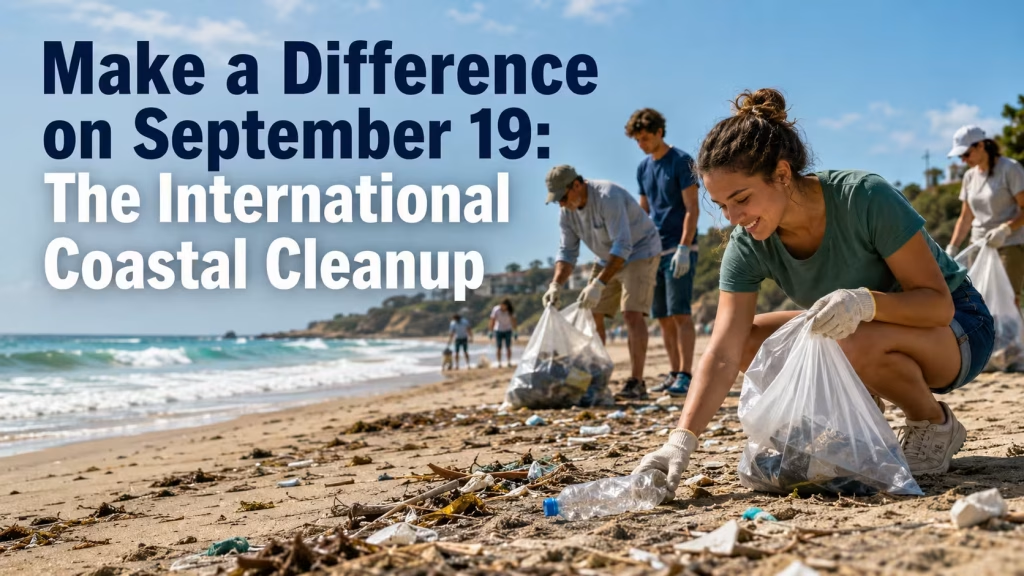
A Global Cleanup Is Coming
On Saturday, September 19, 2026, people around the world will roll up their sleeves, grab a pair of gloves and head to beaches, rivers, lakes and waterways for the International Coastal Cleanup (ICC). Organized by Ocean Conservancy, the event is the world’s largest volunteer effort focused on removing trash from coastal areas and waterways.
Although September 19 is the official cleanup day this year, the event has grown so large that thousands of cleanups take place throughout September. Volunteers don’t just pick up garbage—they also record what they find, creating a massive database that helps scientists, conservation groups and governments understand where ocean trash comes from and how to stop it.
It Began in 1986
The International Coastal Cleanup began in 1986 with a relatively small effort in Texas. The first cleanup involved about 2,800 volunteers who removed approximately 124 tons of debris. What began as a local attempt to tackle growing amounts of coastal trash has become a worldwide movement.
Now, nearly 20 million people have participated in ICC cleanups since the program began, removing more than 405 million pounds of trash from beaches and waterways around the globe. Volunteers have also recorded nearly 440 million individual pieces of marine debris.
The idea was never simply to make beaches look nicer. Ocean Conservancy wanted volunteers to document the trash they found so researchers could identify the most common types of debris and determine how it was getting into the environment. That information has since helped influence policies designed to reduce plastic pollution.
What Was Found Last Year?
The latest 2025 International Coastal Cleanup results, released by Ocean Conservancy just days ago, show just how enormous the problem remains. Volunteers collected 1,338,712 plastic beverage bottles during the 2025 cleanup. They also picked up 885,854 plastic bottle caps, making bottles the most commonly recorded item and bottle caps the third most common.
But bottles and caps were only part of the problem. The 2025 cleanup also documented enormous quantities of single-use plastics and other everyday litter, including food wrappers, cigarette butts, plastic bags, containers and other discarded packaging. These items are particularly concerning because plastics can persist in the environment for years, breaking apart into smaller pieces rather than simply disappearing.
The previous year’s results provide another startling picture. In 2024, volunteers collected more than 7.4 million pounds of trash worldwide, including more than 1.4 million food wrappers, 1.2 million beverage bottles and 1.2 million cigarette butts.
More Than Picking Up Trash
The International Coastal Cleanup is about more than filling garbage bags. Every piece of litter volunteers identify adds to a worldwide picture of marine pollution. That information can help researchers discover trends and can give policymakers evidence for reducing single-use plastics and improving waste management.
Ocean Conservancy says ICC data have already helped support policies such as plastic bag restrictions and bans on certain foam products.
So, on September 19, consider joining a local cleanup—or organizing one yourself. A single bottle or cigarette butt may seem insignificant, but millions of pieces of litter add up. The International Coastal Cleanup demonstrates an important lesson: when people around the world work together, picking up one piece of trash at a time can make a very big difference.