





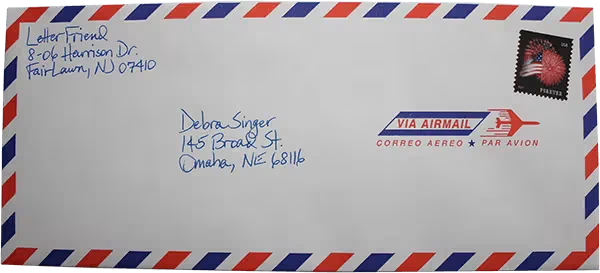
A Tradition That Spanned Centuries
For hundreds of years, handwritten letters were the primary way people stayed connected across distances. From love letters and family updates to political correspondence and literary exchanges, letters carried news, emotions, and personal stories. The time it took to write, send, and receive a letter often made the message feel more meaningful. Each page reflected the writer’s personality through handwriting, word choice, and even ink and paper, creating a deeply personal form of communication that helped sustain relationships despite physical separation.
The Digital Shift and a Decline in Letters
The rise of computers, email, and later text messaging dramatically changed how people communicated. Messages became instant, efficient, and easy to send to many people at once. While this speed offered convenience, it also reduced the intimacy of communication. Handwritten letters gradually dwindled because they required time, effort, and patience—qualities that seemed less necessary in a fast-paced digital world. Typing replaced penmanship, and inboxes replaced mailboxes.
Why Letters Are Making a Comeback
In recent years, many people have begun rediscovering the charm of handwritten letters. In a world dominated by screens and constant notifications, letter writing offers a slower, more mindful experience. Writing by hand encourages reflection and focus, while receiving a physical letter feels special and intentional. For many, it is a way to disconnect from digital overload and reconnect with something tangible and human.
A Personal Touch in a Digital Age
The resurgence of handwritten letters is also fueled by a desire for authenticity. A handwritten note feels unique in a way an email cannot replicate. From pen-pal communities to handwritten thank-you notes and personal stationery, people are embracing letters as meaningful keepsakes. While digital communication remains essential, handwritten letters are once again valued as a powerful, heartfelt way to stay connected.