




Frank Baum: The Imaginative Mind Behind Oz
- Frank Baum was an American author with a lifelong love of storytelling and theater. Born in 1856, he explored many careers—journalism, playwriting, shopkeeping—before discovering that children’s literature was where his imagination truly shined. In 1900, he published The Wonderful Wizard of Oz, a book that combined Midwestern familiarity with pure fantasy. Its success was immediate and overwhelming, prompting Baum to continue writing about the world of Oz.
In the end, he wrote 14 Oz novels. Baum believed that children deserved modern fairy tales—stories free from the grim and moralizing tone of classic European tales. He crafted Oz as a place where kindness, courage, and imagination mattered most. His readers wanted more adventures, and Baum happily delivered, expanding the world with new characters, magical lands, and deeper lore that cemented Oz as one of America’s most beloved fantasy realms.
Oz on Silent Film and Stage
The popularity of the Oz stories quickly led to adaptations. As early as 1908, silent films brought parts of Baum’s world to the screen. Several short silent movies were produced, some directly overseen by Baum himself, who even started a film company to bring Oz adventures to life. These films experimented with early special effects, blending practical tricks and imaginative costuming.
Theater also embraced Oz. In 1902, a wildly successful Broadway musical adaptation toured nationally, introducing songs, humor, and a more whimsical interpretation of the characters. This stage production helped shape the public’s early visual understanding of Oz long before Hollywood created its iconic version.
The 1939 Technicolor Classic
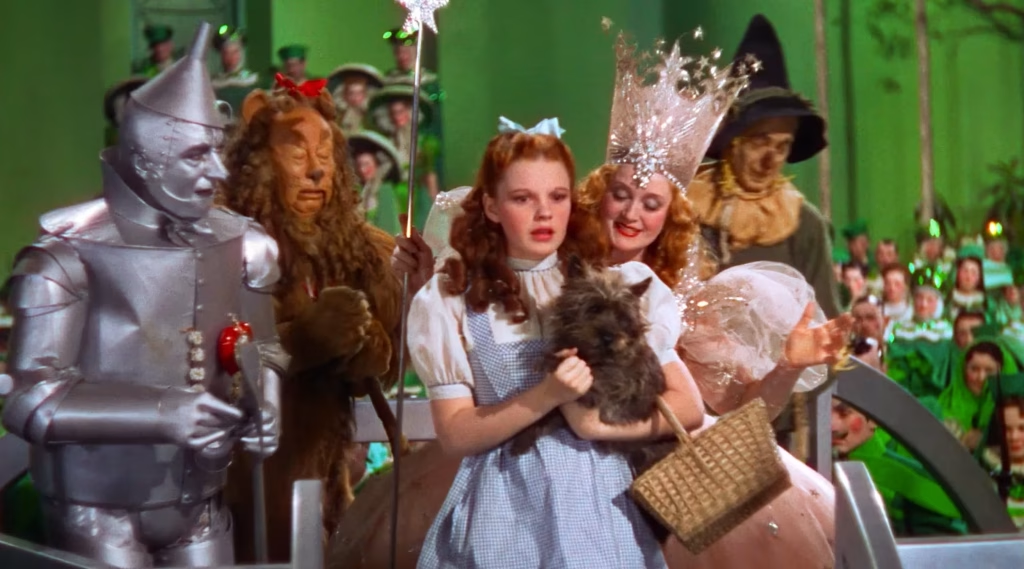
The most famous adaptation arrived in 1939 with the groundbreaking musical film starring Judy Garland. Celebrated as one of the earliest and most influential Technicolor movies, it dazzled audiences with vibrant imagery, unforgettable songs, and enduring performances. Its innovative use of color—transforming the sepia-toned Kansas into the brilliant hues of Oz—became one of the most iconic transitions in cinema history.
A Modern Return: Wicked and Wicked: For Good
Decades later, the world of Oz inspired a new story: Wicked. Written as a prequel focusing on the witches of Oz, it reimagines their histories and explores the friendship and tensions that shaped them. The musical—and its cinematic adaptations, including Wicked: For Good—offers a fresh perspective on familiar characters, proving that Oz continues to enchant audiences over a century after Baum first opened its magical gates.