





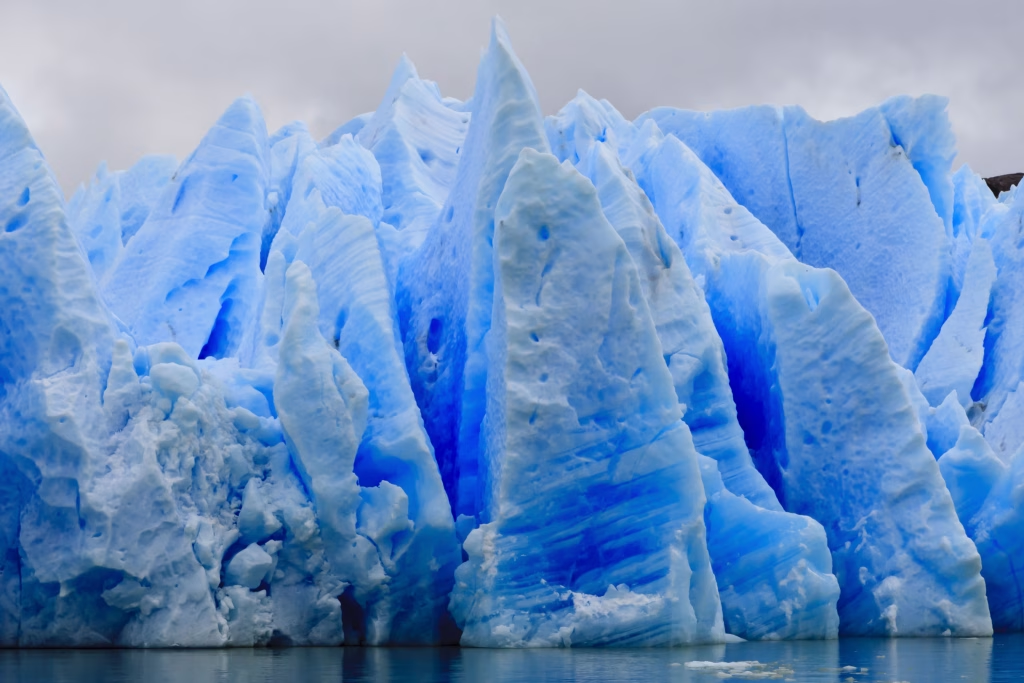
Alaska’s breathtaking landscapes feature glaciers and ice formations that often appear blue. This striking color is a result of the way ice interacts with light. Below, we explore the key reasons behind this natural phenomenon.
How Light Affects Ice Color
When light enters ice, it interacts with the ice molecules. Ice absorbs longer wavelengths of light, such as red and yellow, while scattering and transmitting shorter wavelengths, like blue. The more compact and dense the ice, the more it absorbs warm colors, making blue the most visible hue to our eyes.
The Role of Glacial Ice Density
Glaciers form over centuries as layers of snow compress into dense ice. This process removes air bubbles that would typically reflect all wavelengths of light, making fresh snow appear white. In contrast, glacial ice, which has fewer air pockets, absorbs and scatters light more efficiently, enhancing the blue effect.
Thickness and Purity of Ice
The thicker and purer the ice, the more pronounced the blue color becomes. Thin ice or ice mixed with dirt and debris will often appear white or gray. This is why freshly broken glacier ice or deep ice caves display the most vivid blue shades.
Blue Ice Caves and Icebergs
Alaska’s ice caves and floating icebergs are famous for their deep blue tones. Ice caves filter sunlight, reducing reflected light, which makes the blue hue stand out. Similarly, icebergs that have recently calved from glaciers often exhibit intense blue shades before they weather and fade.
Conclusion
The blue color of Alaskan ice is a mesmerizing example of physics in nature. From massive glaciers to hidden caves, this phenomenon highlights the beauty and science behind Alaska’s frozen landscapes.