



Before There Were Drive-Thrus, There Were Carhops
Today, pulling up to a drive-thru window for a burger, fries and a drink seems like one of the most ordinary things in the world. But the idea began with a much different way of serving food. Before customers could order from a speaker and drive straight to a window, restaurants brought the food out to them.
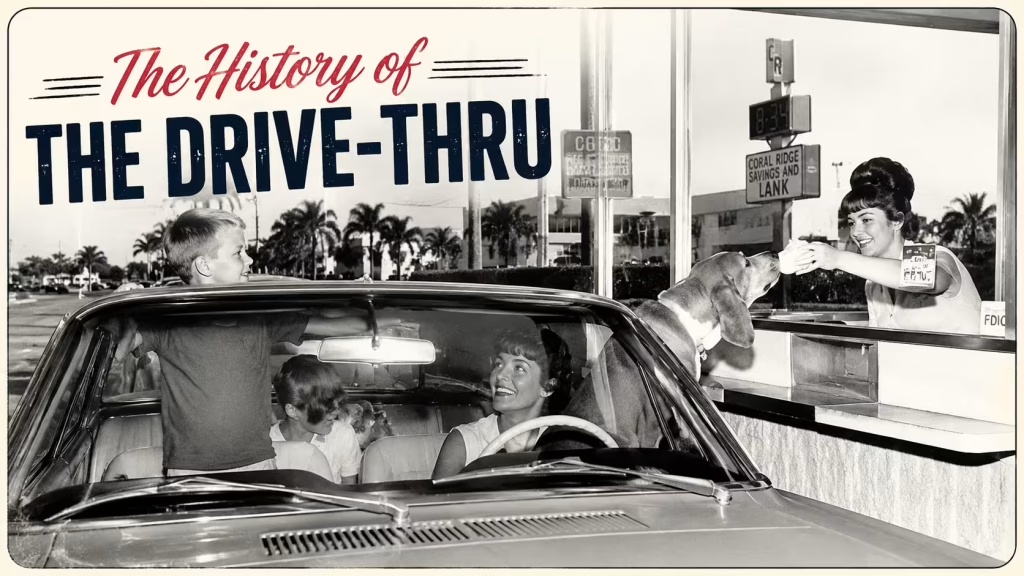
The first drive-in restaurants appeared in the 1920s. One of the earliest was the Pig Stand, which opened on the Dallas-Fort Worth highway in Texas in 1921. Customers parked their cars, and “carhops” came out to take their orders and deliver meals. Trays could be attached to car windows so diners could eat without getting out.
As the popularity of drive-ins grew, so did the need for faster service. Some carhops became famous for skating between parked cars on roller skates, carrying hamburgers, fries and milkshakes. Eventually, restaurants began experimenting with ways for customers to order without even waiting for a server to reach their car. Speaker systems allowed diners to place orders from their parking spaces, creating an important bridge between the drive-in and the modern drive-thru.
The Drive-Thru Is Born
The late 1940s brought the biggest breakthrough. In 1947, Red’s Giant Hamburg in Springfield, Missouri, is widely credited with opening one of the first true drive-thru restaurants. The following year, In-N-Out Burger opened its first location in Baldwin Park, California.
In-N-Out founder Harry Snyder took the concept even further. He developed a two-way speaker system that allowed customers to order from their cars and then drive forward to receive their food. The tiny restaurant had no indoor seating, making the automobile an essential part of the dining experience. In-N-Out itself credits Snyder with developing the speaker system that made true drive-thru service possible.
Fast Food Chains Jump On Board
Other early adopters helped turn the idea into a national phenomenon. Jack in the Box opened restaurants beginning in 1951 that had no indoor seating and used two-way speakers for customers in their cars. Wienerschnitzel experimented with car-oriented designs in the 1960s, while Wendy’s introduced its pickup window in 1970.
Interestingly, McDonald’s was relatively late to the party. Although its restaurants were designed around speed and takeout, the company’s first drive-thru did not open until January 24, 1975, in Sierra Vista, Arizona. The idea was partly prompted by nearby soldiers who could not leave their vehicles while wearing their uniforms. A sliding window solved the problem—and proved extremely popular.
From Novelty to Necessity
By the 1970s and 1980s, drive-thrus were spreading rapidly. Longer commutes, suburban growth and increasingly busy lifestyles made the ability to order food without leaving the car enormously appealing. Restaurants also discovered that drive-thrus could serve large numbers of customers quickly and efficiently.
The drive-thru even changed automobiles. As people began eating and drinking behind the wheel more often, cupholders became increasingly important. By the late 1980s, they were becoming standard features in many cars.
What began with roller-skating carhops carrying trays to parked vehicles eventually evolved into speakers, payment windows and pickup windows. Today, the drive-thru is more than a convenience—it is one of the defining features of American fast-food culture.