





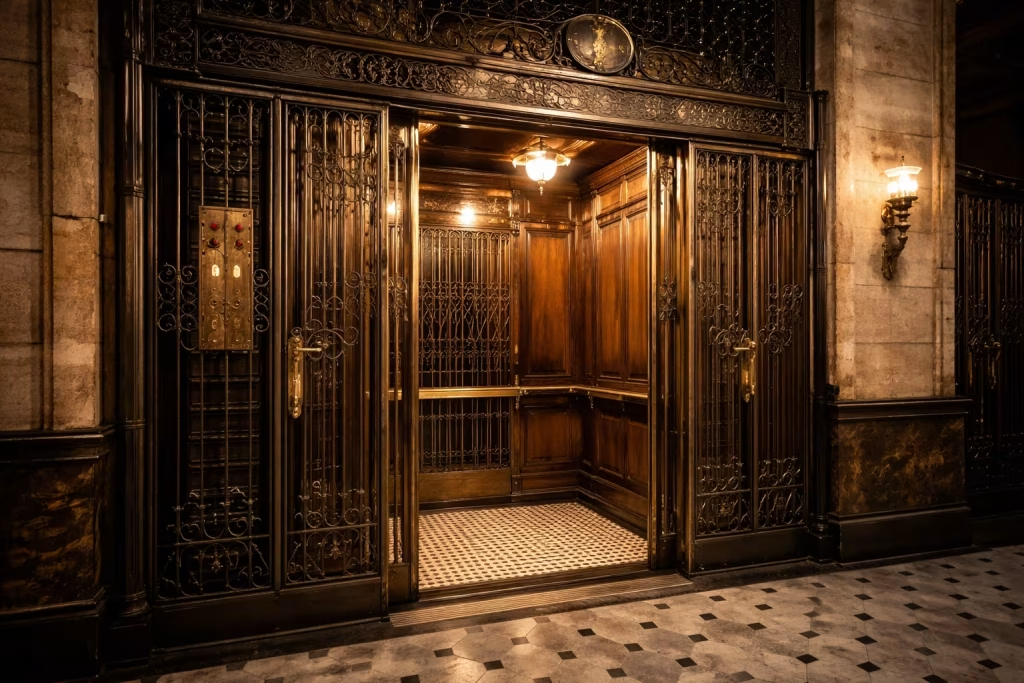
The First Lift Off
The concept of the elevator dates back thousands of years, with early versions reportedly used in ancient Rome. However, the modern elevator began to take shape in the 19th century thanks to Elisha Otis. In 1853, Otis introduced a groundbreaking safety device that prevented elevators from falling if a cable snapped. He famously demonstrated this at the New York World’s Fair 1853, dramatically cutting a hoisting rope while standing on the platform—proving it wouldn’t drop. This innovation made elevators safe for everyday use and paved the way for skyscrapers.
How Elevators Work (Without the Jargon)
At its core, an elevator is a carefully balanced system. Most modern elevators use cables, pulleys, and a counterweight. The elevator car is attached to strong steel cables that loop over a motorized pulley. On the other side is a counterweight, which helps balance the load—so the motor doesn’t have to do all the work.
Think of it like a see-saw: if one side is heavy, it takes more effort to move. But if both sides are nearly equal, movement becomes smooth and efficient. When you press a button, a motor turns the pulley, raising or lowering the car. Braking systems and sensors ensure everything stops safely at the right floor.
Reaching New Heights
Elevators have made it possible to build ever taller structures. Today, some of the world’s most impressive elevators can be found in iconic skyscrapers like the Burj Khalifa, the tallest building on Earth, and the Shanghai Tower, known for its ultra-fast lifts. The One World Trade Center also features high-speed elevators with immersive displays.
From ancient hoists to high-speed marvels, elevators continue to lift both people—and engineering—to new heights.