





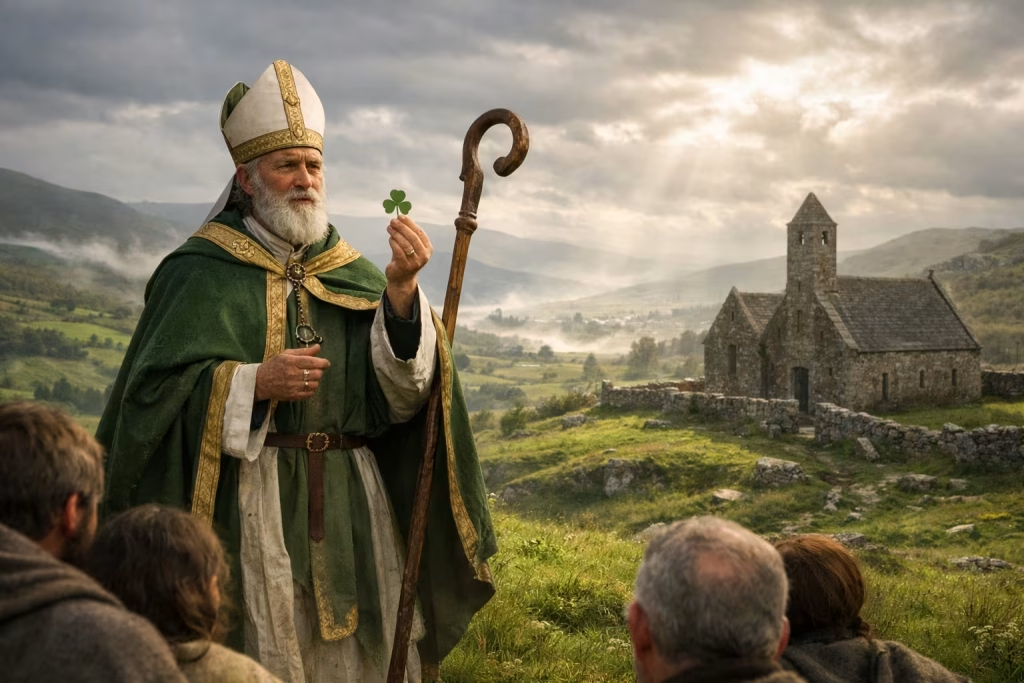
Saint Patrick is one of the most recognized religious figures in the world, best known as the patron saint of Ireland. Though closely associated with Irish identity, Patrick was not actually born in Ireland. He was born in Roman Britain in the late 4th century. As a teenager, he was kidnapped by Irish raiders and enslaved in Ireland, where he spent several years tending sheep.
During his captivity, Patrick turned deeply to his Christian faith. After reportedly receiving divine guidance in a dream, he escaped and returned to his family. Later, feeling called to return to Ireland as a missionary, he trained as a priest and eventually went back to the land where he had once been enslaved.
His Missionary Work and Noble Deeds
Patrick’s most notable contribution was spreading Christianity throughout Ireland. At the time, much of Ireland practiced Celtic paganism. Patrick traveled extensively across the island, baptizing converts, establishing churches, and ordaining clergy. His efforts laid the foundation for Ireland’s strong Christian heritage.
One of the most famous legends associated with Patrick is that he used the three-leafed shamrock to explain the Christian concept of the Holy Trinity—Father, Son, and Holy Spirit. Whether or not this story is historically accurate, the shamrock remains a powerful symbol of both Patrick and Ireland itself.
Another well-known legend claims that Patrick drove all the snakes out of Ireland. While Ireland never had native snakes due to its climate and geography, the story is often interpreted symbolically, representing his efforts to drive out pagan beliefs and replace them with Christianity.
Why He Is Celebrated Every March
St. Patrick’s Day is celebrated annually on March 17, the traditional date of his death in 461 AD. The day began as a religious feast honoring his life and missionary work. Over time, it evolved into a broader celebration of Irish culture, heritage, and pride.
Celebrated Around the World
Although rooted in Ireland, St. Patrick’s Day is now observed worldwide. Large parades take place in cities such as New York, Chicago, Boston, and Sydney. Irish immigrants played a significant role in spreading the holiday, particularly in the United States, where communities celebrated their heritage proudly.
Today, St. Patrick’s Day goes beyond religious observance. It is a global celebration of Irish culture, marked by music, dancing, green attire, and community gatherings. From small villages to major cities, people of all backgrounds join in honoring a man whose legacy continues to shape both faith and culture centuries later.