





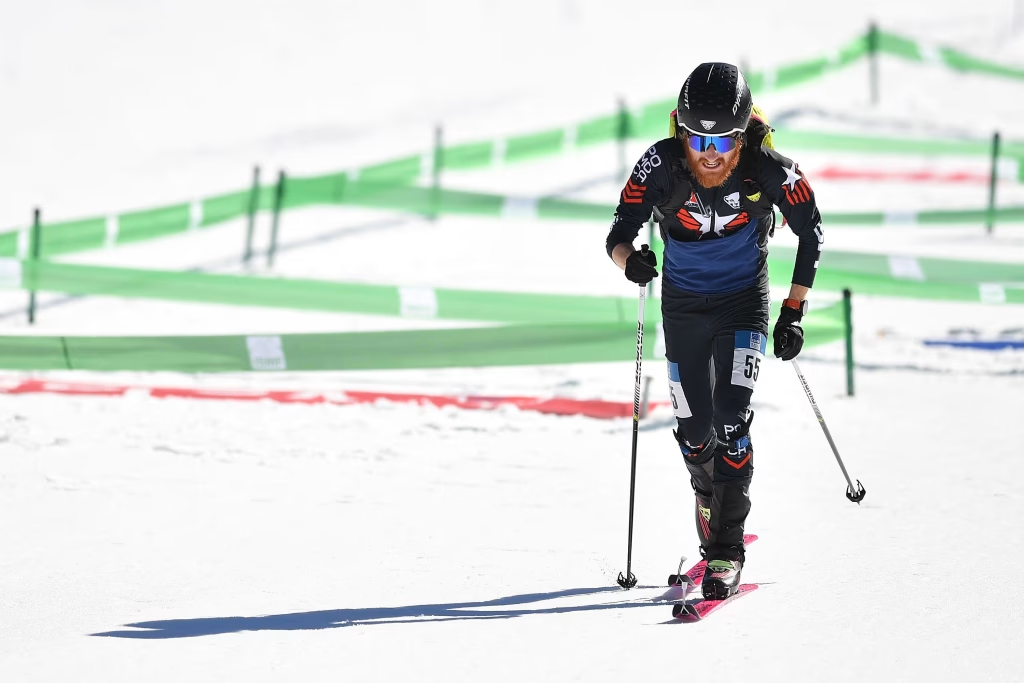
Ski mountaineering—often shortened to ski mo—is one of the most demanding winter sports on the planet. It blends alpine skiing, endurance racing, and technical mountaineering into a single discipline that pushes athletes to their absolute physical and mental limits. Competitors ascend steep, snow-covered mountains under their own power using skis fitted with climbing skins, then race back down on the same terrain. There are no chairlifts, no breaks, and very little margin for error.
A Sport Built on Self-Powered Ascent
At the heart of ski mountaineering is the climb. Athletes attach synthetic skins to the base of their skis, allowing them to glide forward uphill while preventing backward slippage. These ascents can involve thousands of vertical feet and take place at high altitudes where oxygen is thin and temperatures are brutally cold. Ski mo racers move quickly and efficiently, transitioning between climbing, boot-packing, and downhill skiing multiple times during a single race.
Lightweight Gear, Heavy Demands
Ski mountaineering equipment is engineered to be as light as possible—carbon-fiber skis, minimalist bindings, paper-thin boots—because every ounce matters on long climbs. But lighter gear doesn’t make the sport easier. Athletes must manage their equipment flawlessly while exhausted, often adjusting bindings or ripping skins off their skis in seconds during transitions. Any mistake can cost precious time or energy.
The Physical Toll on Athletes
Ski mo is relentlessly taxing. Elite racers sustain heart rates near their maximum for extended periods, combining cardiovascular endurance with full-body strength. The legs endure constant climbing and aggressive descents, while the core stabilizes on uneven, unpredictable terrain. Add altitude stress, freezing temperatures, and rapid pace changes, and it becomes one of the most physically punishing endurance sports in winter athletics.
Mental Grit and Technical Skill
Beyond physical exhaustion, ski mountaineering demands razor-sharp focus. Athletes must read snow conditions, manage fatigue, and descend technical slopes at high speed—often after already climbing for hours. Mental toughness is essential, as races can be won or lost during a single transition or descent made while utterly spent.
From Mountain Roots to the World Stage
Once practiced primarily in Europe’s Alpine regions, ski mountaineering has exploded in global popularity and is now featured in international competitions. Its inclusion in the Winter Olympics has brought new attention to a sport that has long been considered a true test of mountain athleticism.
The Ultimate Endurance Challenge
Ski mountaineering is not just skiing uphill—it is a brutal, beautiful blend of endurance, strength, skill, and resilience. For the athletes who compete, ski mo represents one of the purest expressions of human performance in extreme winter environments, where every climb is earned and every descent must be survived.